
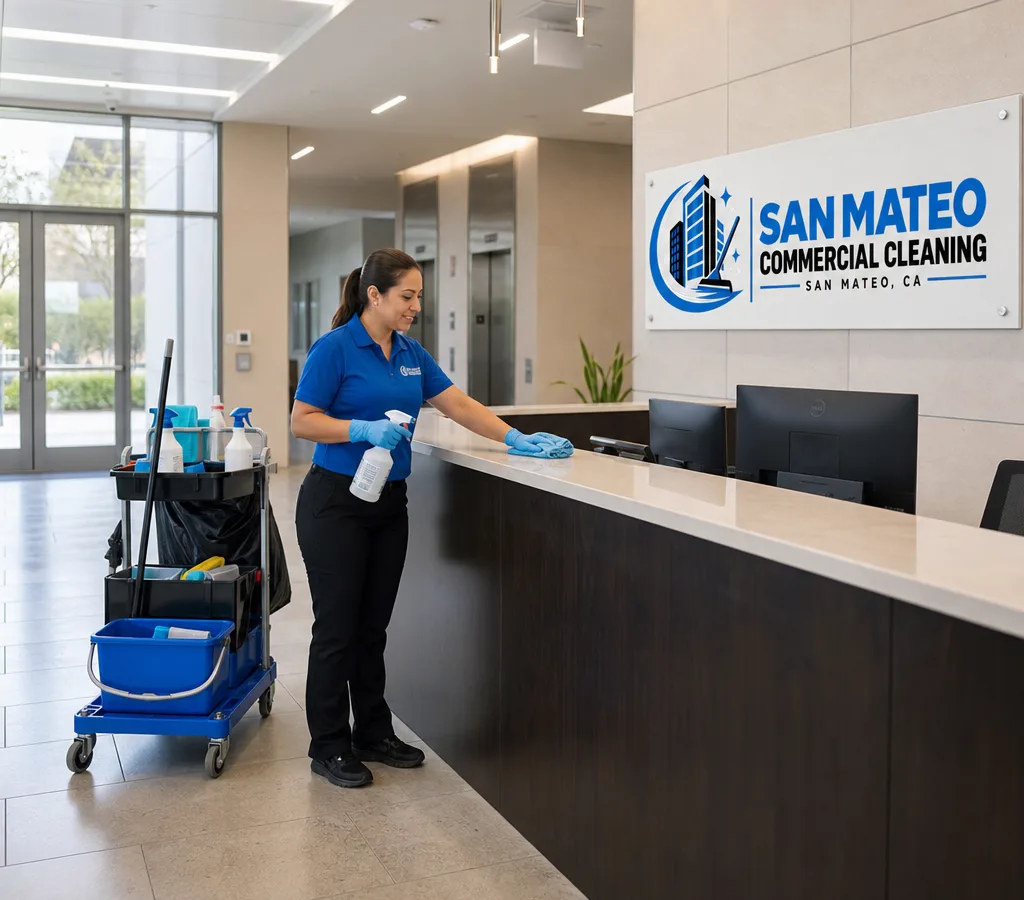
Office Cleaning in San Mateo
Office Cleaning for Shared Workplaces
Office managers and facilities leads can use this page to frame a commercial cleaning discussion around desks, meeting spaces, kitchens, restrooms and shared entry points. The useful starting point is not a fixed package, but a written view of how people use the workplace each day.
Plan around the working day
Start with the spaces people share
Office cleaning is easier to assess when a manager separates the spaces that shape the first impression from the spaces that quietly collect the most daily use. Reception desks, meeting rooms, kitchens, restrooms, corridors and shared entrances all need different prompts in a cleaning brief. A clear description of those areas gives the discussion a practical base before anyone decides what belongs on a recurring checklist.
For San Mateo and wider Peninsula workplace searches, it helps to map the route a visitor or colleague takes through the premises. Entry glass, floors, seating, shared tables and bins can be listed alongside the less visible but still important areas, such as kitchenette counters, copier corners and internal meeting rooms. The aim is to identify priorities, not to presume a frequency or outcome that has not been agreed.
A useful brief also records handover points between teams. For example, an office manager may note where a building-managed lobby ends and an internal reception begins, or where a shared kitchen becomes a tenant space. These distinctions keep a cleaning conversation tied to the premises rather than relying on broad labels that different people may read differently.
Ask who uses each area, when it is busiest, and whether the room is open to visitors, staff only or used by both. That simple map can reveal where a routine task belongs and where an occasional detail task may be more useful. It also makes later changes easier to review because the scope refers to a place and purpose rather than a vague instruction to ‘clean the office’.
Build a reviewable brief
What an office scope can describe
A useful office-cleaning brief names the surfaces and rooms that matter to the people responsible for the premises. It may cover desk-adjacent areas that are ready for cleaning, meeting-room tables and chairs, kitchen surfaces, restroom fixtures, waste points, interior glass and common-area floors. It can also record access notes, shared responsibilities and any areas that should be left untouched.
Recurring tasks are often easier to organise through janitorial cleaning planning, where routine work is grouped by space rather than assumed from a generic list. A separate conversation about floor care can help when hard surfaces or carpeted common areas need a periodic review alongside everyday upkeep. These are complementary decisions, not interchangeable labels.
Make the brief readable by the person who will review it later. Define what ‘shared kitchen’ includes, distinguish a boardroom from a casual meeting zone, and state where bins, paper products or personal items sit in the process. This does not guarantee a result; it gives both sides a workable way to discuss what is included and what needs further direction.
Coordinate related priorities
Keep office cleaning connected to the rest of the premises
Workplaces rarely need one isolated decision. An office within a mixed-use property may share an entrance, lift lobby or amenity area with other occupiers. A facilities lead can use the same scope conversation to distinguish the internal office from the common areas controlled by the building, avoiding assumptions about who owns each task.
Managers comparing workplace needs across nearby locations can also review the planning guides for Foster City commercial premises and Redwood City workplaces. The local references are a way to frame a search, not a statement about a particular building or account.
Before making contact, collect the room list, approximate use patterns, points of concern and any questions the office manager wants documented. That preparation makes it easier to discuss areas, priorities and a schedule that suit the premises without relying on assumptions.
Office cleaning questions
Frequently asked questions
What information helps define an office-cleaning scope?
A room list, the people who use each space, visible priorities, floor types and any access or building notes give the discussion a useful starting point. They help separate routine tasks from questions that need more detail.
How do recurring tasks differ from floor-care planning?
Routine work can be organised around everyday surfaces and shared spaces. Floor care is a separate conversation about the material, traffic pattern and periodic attention a manager wants to discuss.
Can a scope include meeting rooms and kitchens?
Those spaces can be listed in a written scope with the surfaces, use patterns and boundaries that matter to the workplace. The final inclusion is something to confirm during the discussion.
A clearer starting point